
RWENZORI MOUNTAINS NATIONAL PARK UGANDA – RWENZORI NATIONAL PARK
Rwenzori Mountains National Park
Rwenzori Mountains National Park is one of Uganda’s top national parks, worth visiting on a mountaineering safari in Uganda.
This national park was gazetted in 1991, and it was made a UNESCO World Heritage Site in 1994 and later a Ramsar Site in 2008 for its wetlands.
The Rwenzori Mountains are a UNESCO World Heritage Site recognized for their outstanding natural beauty and high biodiversity, with many species found on Mt. Stanley, Mt. Speke, Mt. Baker, Mt. Emin, Mt. Gessi, and Mt. Luigi di Savoia. They were first documented by Ptolemy in AD 150, and he referred to the mountains as the source of the Nile.
Uganda’s highest mountain, the Rwenzori Mountains, is home to unique flora and fauna, including endemic species that can only be found in this region (alpine zone and other vegetation zones).
It is among the best places that provide opportunities to see what nature gives, given the diverse plant species that form the tropical rainforest, montane forest, and other vegetation zones, giving the viewer the best magnificent views of unique flora and breathtaking scenery of snow capped peaks, glaciers, waterfalls, and lakes.
Rwenzori Mountains National Park is famous for the Margherita peak, which is Africa’s third highest peak, attracting many mountain climbers to test their mountaineering skills.
On your visit, you will experience the magic of Margherita Peak at 5,109 meters of icy summits and glacial wonders, delivering the most spectacular views in the heart of the Rwenzori Mountains.
Rwenzori Mountains National Park faced temporary closure from 1999 to 2004 due to regional instabilities, but it was later reopened in 2006.
Below is a detailed overview of location, geography, management, attractions, activities, when to visit, and what to pack for a safari to the Rwenzori Mountains NP.
Location of the Rwenzori Mountains National Park
Rwenzori Mountains National Park is located in south western Uganda in the districts of Kasese, Kabarole, and Bundibugyo. The nearest major town to the park is Kasese, which serves as the gateway to this protected area.
The park borders the Democratic Republic of Congo’s Virunga National Park for about 50 km along the international border. It is centered near the equator at coordinates roughly 00°24′N 29°57′E.
Rwenzori Mountains National Park also lies within the western tourism circuit of Uganda, and it is positioned between Kibale Forest National Park and Queen Elizabeth National Park.
Geography of the Rwenzori Mountains National Park
The Rwenzori Mountains cover approximately 120 kilometers in length and 61 kilometers in width, in the park’s total area of 995 square kilometers.
Unlike other volcanic giants in East Africa, like Mount Kilimanjaro, the Rwenzori ranges in the National Park Rwenzori are a non-volcanic block mountain range formed from uplifted rocks due to the tectonic plate movements rather than volcanic activities.
National Park Rwenzori has six distinctive glacial peaks, including
- Mount Stanley (5,109 m / 16,762 ft)
- Mt. Speke (4,890 m / 16,043 ft)
- Mt. Baker (4,843 m / 15,889 ft)
- Mt. Emin (4,798 m / 15,741 ft)
- Mt. Gessi (4,715 m / 15,469 ft)
- Mt. Luigi di Savoia (4,627 m / 15,180 ft)
National Park Rwenzori receives over 3 meters of rainfall annually, and this contributes to numerous lakes and the evergreen vegetation, including giant tree heathers and mosses, among others.
The Rwenzori Mountains are the only permanently glaciated mountains in Uganda, with over 20 lakes, e.g., Lake Bujuku, fast-flowing rivers, and mountain streams.
Management of the Rwenzori Mountains National Park
Rwenzori Mountains National Park is under the management of the Uganda Wildlife Authority (UWA), which succeeded the Uganda National Parks (UNP). This body focuses on the park’s biodiversity, water catchment protection, and sustainable tourism.
Some of the strategies through which UWA manages the Rwenzori Mountains NP are by putting emphasis on community-based resource sharing, ranger-based monitoring, enforcing anti-poaching measures, and emphasizing community involvement.
Tourist Attractions in the Rwenzori Mountains National Park
The Rwenzori Mountains National Park boasts numerous tourist attractions that are worth seeing on a safari, and these include:
Diverse Wild Animals
There are over 70 mammal species that call Rwenzori Mountains National Park their home, and of these, 4 are endemic to the park, 6 to the Albertine Rift, and only 3 are rare.
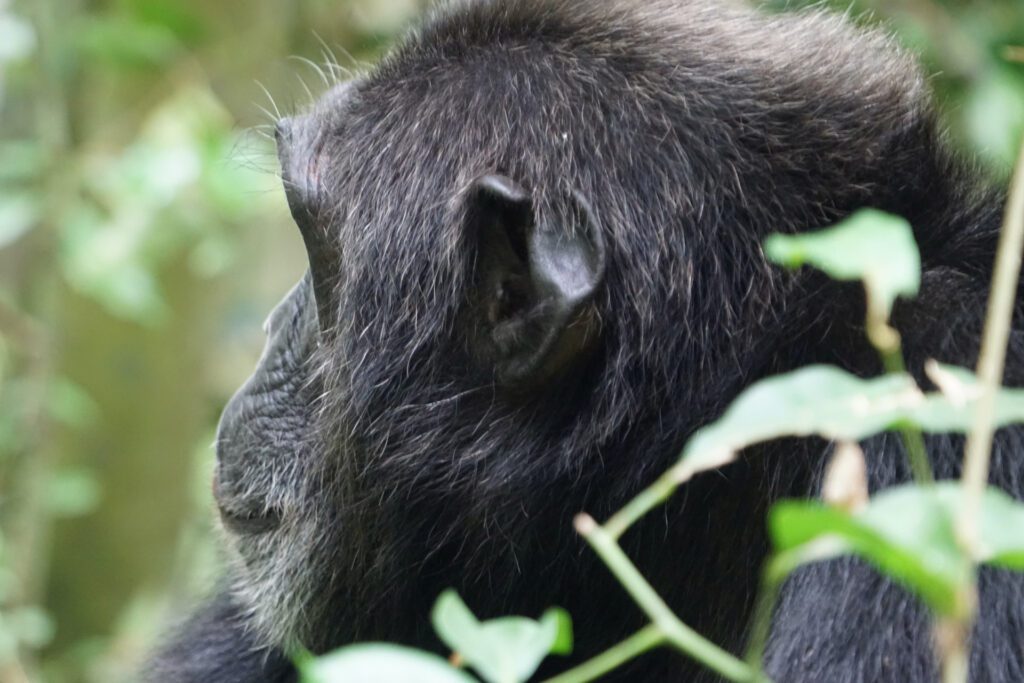
Among the animals in the National Park Rwenzori are elephants, leopards, Rwenzori otters, antelopes like bushbucks, reptiles like chameleons, and primates like L’Hoest’s monkeys. white colobus monkeys, blue monkeys, and other animals.
Bird Species
National Park Rwenzori is home to over 217 bird species, which makes it a significant birding destination in Uganda. Of these, 17 are endemic to the park, and several others are endemic to the Albertine Rift.
The following are some of the bird species in the Rwenzori Mountains National Park: the Rwenzori turaco, the handsome francolin, the long-eared owl, the strange weaver, Lagden’s bush shrike, the Rwenzori batis, the golden-winged sunbird, the white-starred robin, the cinnamon-chested bee-eater, greenbuls, and Archer’s robin chat, among others.
Various Vegetation Types
Rwenzori Mountains National Park features 6 distinct vegetation zones that one may pass through to the mountain peaks, and these include
- The savannah zone (680-1800 m)
- Afromontane forest zone (1800-2600 m)
- Bamboo forest zone (2600-2900 m)
- The heather/rapanea zone (2900-4000 m)
- The alpine moorland zones (4000-4500 m)
- The rocky/glacier zone (4500-5109 m)
Some of the flora of the Rwenzori Mountain Peaks include giant lobelia, groundsel, giant heather, giant ferns, mosses, and lichens, which are signature plants of the region.
The Rwenzori Snow Peaks

The snow-capped peaks are one of the breathtaking sights in the Rwenzori Mountains. These form as a result of its highest peak, with the tallest being at 5109 meters above sea level. For every 1000 meters gained on the trek, the temperature drops by 6.5°C.
It is for these snow-capped summits that the Rwenzori Mountain range was given the name the Mountains of the Moon by the Alexandrian geographer and astronomer Ptolemy around AD 150 because the peaks shimmer like the moon.
Rwenzori Lakes and Rivers
Lakes
The Rwenzori Mountains National Park contains over 20 lakes that are worth seeing while on your adventure safari in this park.
Some of the lakes are held in natural dams of glacial moraine, and they include Lake Bujuku in the Bujuku Valley, Lake Mahoma, Kitandara Lakes, Lake Irene, Lake Noir, which is on the side of DR Congo, 8 Nyamwamba Valley lakes along the Kilembe Trail, Lake Batoda, Lake Bigata, and Lake Kachope, among others.
Rivers
Besides lakes, there are rivers fed by the Rwenzori mountains’ melting glaciers and high annual rainfall, which act as a lifeline for the surrounding communities and wildlife in the Rwenzori Mountains National Park.
These rivers include Nyamwamba, Nyamugasani, Mpanga, Mubuku, Bujuku, Ruimi, and Lamya, which flow into Lake Albert and Lake Edward.
Waterfalls in Rwenzori Mountains National Park
National Park Rwenzori features breathtaking waterfalls worth exploring on a Waterfall Circuit Trek from the Kilembe trailhead.
The main falls include Sebwe Falls, Kamalha Falls, Cathy’s Falls, Nyamwamba Falls, Plozza Falls, Bridal Veil Falls, the Twin Falls (Rwatha and Nyamughasana), and Enock Falls.
Interesting Things to Do in the Rwenzori Mountains National Park
Rwenzori Mountains National Park offers numerous activities such as mountaineering, nature walks, birdwatching, and game viewing, among others.
Mountaineering to Margherita Peak in the Rwenzori Mountains National Park

The Rwenzori Mountains are less crowded compared to other popular trekking destinations like Mount Kilimanjaro (the highest peak on the African continent) and Mount Kenya, making for a more serene experience.
Mountaineering the Rwenzori Mountains/Rwenzori trekking is the top activity to do in the park, especially for hikers who may want to summit Mt. Stanley’s Margherita Peak at 5109 meters above sea level, making it the highest point in Uganda and the third highest point in East Africa and the whole of Africa after Mt. Kilimanjaro and Mt. Kenya.
The trek to Margherita Peak on Mount Stanley, which is the highest peak, involves navigating through various vegetation zones, including montane forest, tropical jungle, and the Afro-alpine zone, among others. This trek to Margherita Peak at Mt. Stanley typically takes a minimum of seven days for proper acclimatization.
To summit Margherita Peak at Mt. Stanley is considered a technical climb, and it requires the use of crampons and ice axes to conquer, especially when crossing Stanley Plateau. This is not the case when you attempt to climb Kilimanjaro, which is less technical.
Rwenzori Trekking is classified as high-altitude trekking, which may lead to altitude sickness, but to maintain the summit success rate, it is advisable for hikers with such challenges to carry medicine.
Proper preparation for Rwenzori Trekking is also vital for high-altitude treks, as climbers must adjust to lower oxygen levels as they move towards the summit of Margherita Peak at 5109 meters.
Hikers are also required to be prepared for a combination of sun, rain, mud, fog, ice, and snow while trekking Rwenzori since weather conditions change at different trekking levels.
The treks in the Rwenzori range typically require a minimum of seven days for a rewarding hiking experience.
The Rwenzori Mountains/Rwenzori Range receive over 3 meters of rainfall a year, which affects the climbing conditions since it creates mud, and the hiking trails may be slippery, making the experience more challenging.
Since the whole activity of hiking the Rwenzori Mountains takes several days, the accommodation during treks in the Rwenzori Mountains is provided in wooden mountain huts.
Trekking Routes
Unlike other popular mountain climbing destinations in Uganda, the Rwenzoris are a mountain range with a variety of hiking trails ranging from demanding to mild. These include the Central Circuit and Kilembe Trail, which lead to Margherita Peak.
The Central Circuit Trail is considered the classic trekking route in the Rwenzori Mountains since it offers challenging terrain, diverse ecology, and scenic beauty. This route is 45 km, and it takes 7 to 9 days to reach the Margherita peak on Mt. Stanley.
The Central Circuit is also known to be the oldest and most used route in the Rwenzori Mountains NP, offering a circular seven-day trek that brings hikers face-to-face with the range’s highest peaks.
The Kilembe Route (Southern Circuit), which is managed by trekking services, though long, is an alternative trekking route of 82 km that takes about 7 to 8 days to complete.
The Kilembe Southern Circuit is accessed from the Kasese area, which is the gateway to the Rwenzori Mountains.
Guided Nature Walks
Visitors to the Rwenzori Mountains National Park have an opportunity to engage in guided nature walks, especially in the central circuit zone.
While on these nature strolls, you will walk through communities like Kichwamba to arrive at the Karangura ridge and walk to Turaco View and Ruboni Village for an interesting forest walk.
You will also walk to the Mubuku River and other places within the Rwenzori Mountains NP. While on the nature hikes, you will have sights of unique plant species and animals.
Bird Watching in the Rwenzori Mountains National Park
Bird watching is another amazing activity to do while in the Rwenzori Mountains National Park.
Given the fact that the park is within the Albertine Rift Valley, it has a conducive environment for the survival of many bird species.
There are over 217 avian species in the park, and some of these Uganda birds include Rwenzori turacos, rufous-breasted sparrowhawks, mountain chats, Ruwenzori olive thrushes, white-tailed crested flycatchers, red-throated Alethes, Archer’s robin-chats, olive-breasted mountain greenbuls, strange weavers, Rwenzori batis, golden-winged sunbirds, etc.
Game Viewing in the Rwenzori Mountains National Park
Game viewing in the Rwenzori Mountains National Park is also among the interesting things to do in the park.
This activity focuses on spotting some montane-adapted wild animals during Rwenzori trekking and nature walks rather than the usual savannah game drives.
Among the commonly spotted animals are forest elephants, giant forest hogs, the rare three-horned chameleon, and primates like blue monkeys and black and white colobus monkeys, among other animals.
Cultural Experiences in the Rwenzori Mountains
Cultural encounters are an integral part of the mountaineering safari experiences in the Rwenzori Mountains that tourists on a Uganda holiday can do. The cultural experiences in the park include interacting with the Bakonzo people through guided tours and cultural trails.
The Rwenzori Mountains are home to the Bakonzo people, who have lived there for hundreds of years and have a deep connection to the local nature. They have built hunters’ shrines and maintain spiritual connections to the land.
On a cultural tour around the Rwenzori Mountains, visitors can enjoy cultural dances and music performances at Ruboni while interacting with the Bakonzo community.
How to Get to the Rwenzori Mountains National Park
To get to Rwenzori Mountains National Park in south western Uganda, where the country’s highest mountain is, one can travel by either road or air transport.
By Air
Visitors from abroad first fly into Entebbe International Airport (EBB), which is 40 km from Kampala, Uganda’s capital.
From here, visitors have the option of either continuing with a flight to Kasese Airstrip (KSE) or traveling by road.
By Road

By road, visitors from Entebbe Airport or Kampala can travel using private or public means to Kasese Airstrip, where they can then further travel by road to the Rwenzori Mountains NP.
Public Transport
From Kampala, one can board a shared taxi to Fort Portal, and here, the trip takes around 4-6 hours, but the travel time is sometimes determined by the traffic and the road conditions.
From Fort Portal, in either a private or public vehicle, you will drive for 2–3 hours to Kasese, the nearest town to Rwenzori Mountains National Park, and it serves as the gateway to the park. A drive from Kasese is about 30-40 minutes.
Private Transport
One may also choose to hire a licensed safari vehicle from a local car hire company. A private vehicle hire feels more comfortable, and it gives you a chance to have stopovers to do shopping and fully enjoy your adventurous safari.
What To Pack for A Trip to Rwenzori National Park
Clothes
. Long-sleeved shirts
- Rain jacket with hood for protection against wind and cold, reducing risks of hypothermia while on high-altitude treks
- Hiking shoes with ankle support for navigating the slippery mountain ridges
- Hiking shorts
- Hiking socks
- Camp shoes
- Gloves
- Neck scarf
- Wide-brimmed hat
- Wool hat or balaclava
- Sunglasses
Trekking Gear for the Rwenzori Mountains
- Water bottles
- Waterproof daypack
- Ice axe
- Hiking rope
- Trekking poles
- Headlamp with extra battery
- Camera with extra batteries
Toiletries Needed
- Deodorant
- Anti-chafe balm
- Face lotion
- Toothbrush and toothpaste
- Bathing soap
Important Documents
- Passport valid for 6 months
- Visa—You should apply for the visa in advance before traveling to Uganda.
- Extra money
Where to Stay Near the Rwenzori Mountains National Park?
Accommodation options in the Rwenzori Mountains range from budget to luxury, and their rates depend on which type of lodge or hotel is booked. The accommodation rates vary depending on the type of lodge or hotel booked.
Popular accommodation choices include Ruboni Community Camp, Rwenzori International Hotel, Equator Snow Lodge, and Hotel Margherita.
When hiking Rwenzori Mountains, the Rwenzori Trekkers Hostel in Kyanjuki Village is a recommended starting point for treks.
Accommodation during treks is typically in wooden huts with bunk beds and shared facilities. These wooden huts are designed to minimize environmental impact.
Best Time to Visit the Rwenzori Mountains National Park
The Rwenzori Mountains/Rwenzori Mountain peaks can be visited all year round, but the dry months of July and August, and December to February are preferred for trekking.
During the dry season, the Rwenzori Mountain range receives less rainfall, making it a better time for hiking since the trekking trails are dry.
Visitor numbers tend to peak during the dry months, June to August, and December to February, because of the favorable hiking conditions.
The wetter months from March to May and September to November are cooler and often misty in the Rwenzori Mountain range, thereby creating hard conditions for one of the world class hiking experiences.
Rwenzori Mountains National Park FAQs (Frequently Asked Questions)
-
Why Is Mountain Rwenzori Called the Mountain of the Moon?
Mountain Rwenzori is called the Mountain of the Moon because of its high snow-capped peaks, which are visible from afar in tropical Africa, shimmering like a moon.
-
What Are the Rwenzori Mountains Famous For?
The Rwenzori Mountains are renowned for their breathtaking snow-capped peaks, misty trekking routes, and spectacular biodiversity. They are also known for being Africa’s third highest mountain.
-
How Many Days Does It Take to Climb Mount Rwenzori? / How Long Does It Take to Climb Mount Rwenzori?
Hiking Rwenzori Mountains typically takes 7 to 8 days via the Central Circuit or Kilembe trails (Southern Circuit). While the fast trek may take 6 days. Spending 8 days for a trek is always recommended for better acclimatization and to reduce altitude sickness.
-
Do People Live in the Rwenzori Mountains?
There are thousands of people, primarily of the Bakonzo tribe, living on the lower slopes and foothills of the Rwenzori Mountains in Uganda and on the side of the Democratic Republic of Congo.
-
How Much Does It Cost to Climb Rwenzori?
Climbing the Rwenzori Mountains to the Margherita Peak at 5,109 meters costs between $1300 and $3000 USD per person. The cost may vary depending on the size of the trekking group, the route used, and the tour operator.
-
How Much Is It to Visit Queen Elizabeth National Park in Uganda?
The entrance fee for Queen Elizabeth National Park is $40 per day for foreign non-residents, $30 for foreign residents, and UGX 20000 for East African citizens.
-
What Does the Name Rwenzori Mean?
The name Rwenzori, also spelled as Ruwenzori, means Rain-Maker” or “Cloud King.” It stems from the Bakonzo word “Ruwenjura,” which refers to the mountain’s role in generating heavy rainfall and constant mist.
-
What Animals Live in the Rwenzori Mountains National Park?
There are over 70 mammals living in the Rwenzori Mountains National Park, and these include leopards, elephants, Rwenzori otters, bushbucks, Rwenzori duikers, primates like chimpanzees, black and white Colobus monkeys, blue monkeys, L’Hoest’s monkeys, etc.
Conclusion
Book your Uganda safari now and get an opportunity to climb the Rwenzori Mountains, Uganda’s highest point and Africa’s third-highest mountain, where you will see snow capped peaks, especially the Margherita peaks on Mount Stanley, the various vegetation zones, wild animals, lakes, rivers, waterfalls, and other amazing sights, which will make your trip memorable.
Related Uganda Safari Destinations



GET IN TOUCH WITH ONE OF OUR LOCAL TRAVEL EXPERTS
Book our Safaris with Confidence Whether you’re a seasoned adventurer or embarking on your first safari, this essential resource equips you with the knowledge and tools to plan and book your dream wildlife expedition with the absolute assurance
we provide expert advice, insider tips, and practical recommendations to ensure a seamless and unforgettable safari experience. Unleash your wanderlust and dive into the captivating world of safari travel, knowing that you have all the tools to embark on your journey with confidence.”
We’re here to assist you with your needs. If you have any questions about our packages or services, feel free to reach out to us

Chat to an African Safari Expert
Speak to East African tour expert for safari advice and suggestions