
KIBALE FOREST NATIONAL PARK – UGANDA KIBALE NATIONAL PARK
Tourist Attractions in Kibale National Park There are numerous tourist attractions in Kibale National Park, and these include Animal Species The park supports about 70 mammal […]
KIBALE NATIONAL PARK - UGANDA KIBALE FOREST NATIONAL PARK
Welcome to Kibale National Park, a tropical rainforest national park that is one of the top Uganda national parks to visit when on Uganda safaris.
It was established in 1993 after the amalgamation of Kibale Forest Reserve with the nearby Forest Corridor Game Reserve to form the present Kibale National Park.
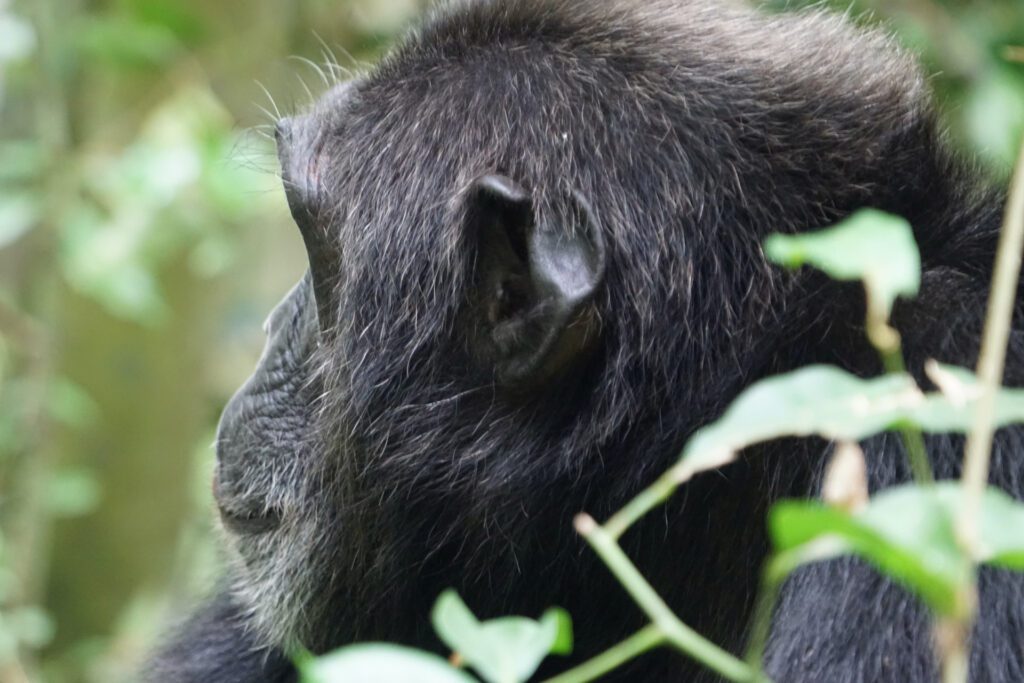
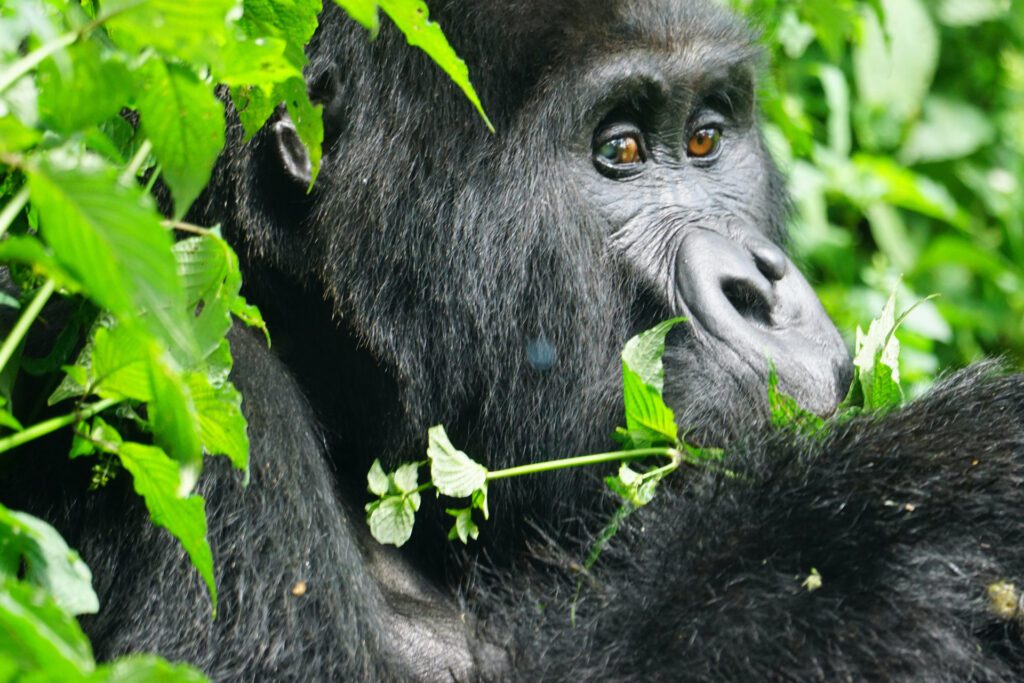
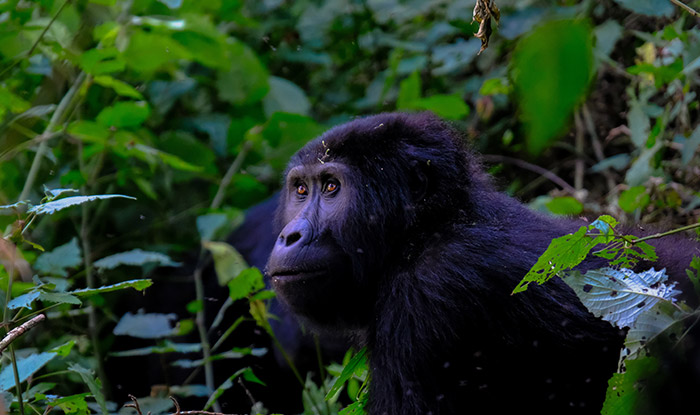
Kibale National Park is home to the highest number and diversity of primates in Africa, with 13 different species recorded, which include endangered chimpanzees and monkey species. For this reason, it is referred to as the primate capital of the world.
Being home to 13 different primate species makes Kibale National Park one of the best destinations for a primate tracking safari in Uganda. It has a high concentration of chimpanzees, with almost 1500 individuals out of the 5000 found in Uganda.
Kibale National Park is far different from many other places in the world where chimps are kept in cages at zoos for visitors to observe.
Besides chimps, it is home to the endangered L’Hoest’s monkeys and has the largest population of the endangered red colobus monkeys in East Africa.
The park features various habitats, including wet tropical forest and savanna, supporting diverse wildlife. Its wildlife corridor links to Queen Elizabeth National Park, enhancing ecological conservation efforts in the region.
Location Of Kibale National Park
Kibale Park is located in Kabarole District in southwestern Uganda, about 348 km from Kampala.
The park is situated near Fort Portal, the biggest town in Kabarole District, which is Uganda’s tourism city, worth exploring on a Uganda vacation, and it takes 30 minutes to drive a distance of about 26.2 km from Kabarole Town to the Kanyanchu Visitor Center, the park headquarters.
This game Park is close to the Ndali Kasenda Crater Area, and it takes about 1 hour and 42 minutes (75.22 km) from Kibale National Park to Queen Elizabeth National Park via Kabarole Town-Mpondwe Rd/A109 and Hima-Katunguru Rd/Mbarara-Kasese Rd. This forms a 180 km long migration corridor between them.
This migration corridor extends from the Ishasha sector, which is a remote southern sector of Queen Elizabeth NP, to Sebitoli in northern Kibale. A drive between these two parks takes about 3–4 hours.
Additionally, takes almost half of the day to drive to the Rwenzori Mountains & Semuliki NP, and the Toro-Semliki Wildlife Reserve.
The park is also 98 km away from Kasese, which takes about 2 hours, and it is also 38.6 km from Kamwenge Town.
Geography Of Kibale Forest National Park
This game park covers an area of 795 square kilometers (307 square miles), and it lies at an altitude between 1100 and 1600 meters above sea level.
Forest covers dominate in the middle part of northern Kibale on the Fort Portal plateau, and Kibale NP is the tallest at 1590m on the park’s northern tip.
The park’s geology consists of Precambrian rock formations, which are strongly folded, while others are metamorphosed. Quartzite, Schists, and Phyllites, interspersed with Amphibolites, Gneiss, and granites, cover these formations.
About 90% of the park’s soils are red ferralitic, while 10% is fertile eutrophic soil over volcanic ash around Mpokya and Isunga on the western edge.
Weather And Climate in Kibale Forest National Park
Kibale NP has a tropical, moist climate, with minimal temperature variations throughout the year, ranging from 14°C to 27°C.
There is no particular dry season in Kibale Forest NP because rain can fall at any time due to the presence of the forest, which helps in the formation of the convectional rainfall.
However, in the dry months, June to August and December to February, little rainfall is received, thereby creating the best time for the different activities in this protected area.
Management Of Kibale National Park
Kibale NP is under the management of the Uganda Wildlife Authority (UWA). In 1996, this body took over the responsibility of consolidating and facilitating wildlife protection and management together with the managing team at the park offices.
UWA is responsible for managing the park’s biodiversity and all wildlife resources. It collaborates with the local communities and other stakeholders, thereby ensuring sustainable development and addressing human-wildlife conflict.
Sample Uganda Safaris: Wildlife Uganda Safari Itineraries, Gorilla Uganda Tours & Community Cultural Trips









Tourist Attractions in Kibale National Park
There are numerous tourist attractions in Kibale National Park, and these include
Animal Species
The park supports about 70 mammal species, including the common chimpanzee, baboon, and various species of monkeys, to enjoy on a Uganda wildlife tour or a primate safari in Kibale Forest National Park.
Species of Primates

Kibale National Park, the primate capital of the world, is home to 13 primate species, and these include
Over 1500 chimpanzees, worth seeing when on a chimpanzee trekking safari in Kibale NP.
Other Primates include:
- Olive baboons
- Black and White Colobus Monkeys
- L’hoest monkeys
- Red Colobus Monkeys
- Red tailed monkeys
- Blue Monkeys
- Uganda Red Colobus
- Vervet Monkeys
- Uganda mangabeys
- Grey-cheeked Mangabey
- Bushbabies
- Pottos
Other Wild Animals
The tropical rainforest is also home to other wild animals, including over 500 elephants, buffalo, leopards, golden cats, bush pigs, warthogs, giant forest hogs, and duikers.
Plant Species/Vegetation
Kibale NP is made up of various vegetation types, including rainforest, grassland, and swamp areas, where you will find different plant species.
Tree Species
The park’s vegetation includes over 351 tree species, including some over 60 meters tall and over 200 years old, forming a moist evergreen cover on the Fort Portal plateau and savannah on the rift valley floor.
Common tree species include the endangered timber trees like Entandrophragma angolense, Piptadenia (Piptadenia africana), Cordia millenii, and Lovoa swynnertonnii, Mahogany, Ironwood, Canarium, and Ficus.
Other Plants
Bamboo: The Giant Bamboo and the Hagenia Bamboo.
Ferns and Palms: ferns like Cyathea spp, and palms like Raphia Palm and Sago Palm
Epiphytes: Orchids, Lichens, and Mosses
Shrubs and Ground Layer Vegetation: Herbaceous plants, Stool plants, Creepers, and vines
Wildflowers: Zingiberaceae (Ginger family)
Medicinal Plants: African Ginger, African Willow, and Aloe Vera
The above and many other plant species can be seen when on nature hikes in Kibale Forest NP.
Stunning Bird Species
Kibale NP is home to over 325 bird species, making it one of the best destinations for bird watching in Uganda.
Among the common forest birds are the great blue turaco, blue breasted kingfisher, green breasted pitta, yellow spotted nicator, blue headed bee eater, dusky crimsonwing, yellow-rumped tinkerbird, African pitta, African grey parrot, eastern nicator, Abyssinian ground thrush, and crowned eagle. These and many others are worth seeing on a Uganda birding tour.
Butterfly Species
There are over 250 species of butterflies, making Kibale NP one of the top recommended destinations for butterfly watching in Uganda.
The park offers the best opportunity to see some of the unique butterfly species according to their order of grouping. The two common groups are fruit feeders and flower feeders.
Fruit feeders include Charaxes zelica, Charaxes paphianus, Charaxes Porthos, Charaxes Pleione, Charaxes fulvescens, Charaxes varanes, Charaxes Achaemenes, Bicyclus safitza, Charaxes Cynthia, Charaxes pollux, Charaxes bipunctatus, and Charaxes castor.
The flower feeders include Acraea epaea, Junonia sophia, Eronia leda, Danaus chrysippus, Precis octavia, Graphium angolanus, Papilio demodocus, Phalanta phalantha, and Junonia oenone, among others. These are worth seeing on a nature walking safari.
Crater Lakes, Found in The Ndali-Kasenda Crater Area
Kibale NP is surrounded by crater lakes, particularly in the Ndali-Kasenda Area, with more than 50 crater lakes.
Some of the lakes include
- Lake Nyamasagani
- Lake Lyantonde
- Lake Mubiro
- Lake Nyinambuga
- Lake Nyabikere
- Lake Nyanswingwa
- Lake Nkuruba
- Lake Kifuruka
- Lake Ntambi
People And Culture
The people of Bigodi village, e.g., the Bigodi women’s group with their diverse cultures, are worth seeing on a Uganda cultural experience.
The Amabere Caves and the Toro King’s Palace, which are highly valued as part of the Batooro cultural heritage sites, can also be seen on a cultural tour.
Tourist Activities in Kibale NP
There are many interesting tourist activities to engage in for a memorable safari experience. these include
Chimpanzee Trekking

Chimpanzee trekking in Kibale National Park is one of the best-selling activities, attracting 90% of the tourists to this protected area, making it a must-do activity when on a Uganda wildlife safari.
The Chimpanzee trekking experience involves hiking through the wet tropical forest under small tree branches for about 2–5 hours to locate the wild chimpanzees.
However, Standard chimpanzee tracking in Kibale usually takes up to 3 hours, including a maximum of 1 hour spent with the chimpanzees.
Visitors in Kibale for chimpanzee tracking should arrive early for registration and a briefing at Kanyanchu Visitor Center on how to carry out the activity.
During chimpanzee tracking, visitors are usually accompanied by a guide, who is armed in case of any attack, and about six people are assigned to a guide or game ranger.
Given the fact that the park has a high population of chimps, the odds of encountering a chimpanzee troop during tracking in Kibale have improved to around 95%.
After finding a chimpanzee, visitors are only allowed one hour with it. During that time, they can observe the apes interacting with one another and communicating through signs and noises that only the chimps can decipher.
Apart from Kibale NP, chimpanzee tracking can also be done in Kalinzu forest, Kyambura gorge in Queen Elizabeth NP, and Budongo Central Forest Reserve.
The best time for chimpanzee tracking in Kibale NP is during the dry season from June to September and December to February.
During the wet season, these exciting primates tend to relocate or hide in their natural habitat.
Chimpanzee Habituation Experience
This interesting activity involves tourists and researchers spending a full day with chimpanzees, studying their behavior, and getting them accustomed to human presence.
During the chimpanzee habituation experience, visitors follow the different chimpanzee communities that are currently undergoing the 2-year habituation experience.
Chimpanzee habituation normally starts at 6 a.m., when the chimps are just rising from their nests. The activity becomes more interesting around midday when the chimps come down from the forest canopy.
Visitors have an opportunity to follow and enjoy every activity that the chimps do in their natural environment.
Bird Watching
Bird watching is popular in Kibale National Park with around 325 bird species, including native species specific to the Albertine Rift area that visitors on a Uganda birding tour should not miss.
Birding in Kibale can result in sightings of rare species such as the green-breasted pitta and the Abyssinian ground thrush, Yellow Spotted Nicator, the black bee-eater, the Dusky Crimsonwing, blue breasted kingfisher, the African pitta, and the Yellow-rumped tinkerbird, among others.
A birding tour in Kibale NP can be combined with a visit to Bigodi Wetland Sanctuary, located in Magombe swamp.
Bigodi Wetland Sanctuary, which is located adjacent to Kibale NP, is also renowned for several primates and birding opportunities since it is home to approximately 138 bird species.
Some of the avian species in Bigodi Wetland Sanctuary can be seen when on a guided walk along the boardwalk trail and viewing platforms. Bird watching tours in Kibale normally begin at 7 am.
Guided Nature Walks and Forest Hikes
Kibale NP offers excellent nature and forest walks to visitors on a Uganda wildlife safari.
These nature hikes are organized from the Kanyanchu Visitor Center and are mainly for birders and primate observers.
There are two types of organized nature walks: day nature walks and night/nocturnal walks.
Day Nature Walk
These involve travelers walking through the jungle with the help of an experienced guide, and a 12 km long Kibale Forest Walk trail that takes between 5 and 6 hours during the day.
Nature hikes offer visitors an opportunity to explore the jungle to spot the flora and fauna.
There are chances of learning about different plant species, including those with medicinal properties, birds and different bird nests, insects, primates like chimps and monkeys, e.g., the red tailed monkeys, and other animals.
The Bigodi Swamp Walk, which is approximately 2-3 hours, also offers opportunities to see various primate species and numerous birds.
On the same day trip in Bigodi Wetland Sanctuary, you can spot some primate species like chimpanzees, black and white colobus, red colobus, red-tailed monkeys, bushbucks, and mongoose.
Night Walks/Nocturnal Walks
Night walks provide excellent chances to observe various nocturnal creatures that are not visible during a day trip. The different nocturnal animals include Potto, cricket, bushbaby, nightjar, tree hyrax, and serval cat, among others.
During night walks, travelers also get a chance to see chimpanzees and other residents in the jungle resting in their nests. For successful night walks, spotlights must be used for excellent visibility.
Crater Lakes Tour
The crater lakes tour in the Kasenda Crater Lake Area in Fort Portal includes hiking opportunities to observe the scenic volcanic landscape and wildlife in the vicinity.
About 50 crater lakes are enclosed in the Kasenda Crater Lake Area that can be explored alongside the renowned chimpanzee tracking.
In addition to crater lake tours, you can also hike to Mpanga Falls, formed by the Mpanga River, before the river empties into Lake George.
Cultural Tours at Kibale NP
The cultural trails in the Kibale area take about 2 to 6 days, allowing visitors to experience local village life and learn about the history and issues faced by the rural communities as part of rural development.
Kibale Cultural Tours allow visitors to visit a traditional village and engage with the traditional lifestyle of the Batooro people.
On the same cultural tour, visitors can enjoy energetic traditional dances and songs performed by the Bakiga and the Batooro.
The community tour in the village of Bigodi also includes a visit to a traditional healer and different local homes to learn about cultural practices.
Visitors also take a visit to Amabere ga Nyina Mwiru, which involves only a short hike to see unique rock formations and the waterfalls, significant to the Batooro tribe.
The Amabere Ga Nyina Mwiru are breast-like rocks found near Nyakasura school. These rocks are some of the commonly visited unique features by visitors on a Uganda cultural tour.
These have a strong cultural attachment to the Batooro tribe. The hiking trails to these rocks are slippery, so travelers must have sturdy hiking shoes.
Once visitors reach the site, the manager welcomes them and explains to them the history and myths the Batooro people have about the rocks (Amabere Ga Nyina Mwiru).
On the same cultural tour, you can also learn about the Uganda school system, visit a local church, among others.
Costs And Charges at Kibale Park
The costs and charges at Kibale NP include the entrance fee, permit fee, and fees for other activities.
Entrance Fees According to Age and Nationality
| Category | Foreign Non-Residents | Foreign Residents | East African Citizens |
| Adults | $40 | $30 | UGX 20,000 |
| Children | $20 | $10 | UGX 5,000 |
| Pupils or students | UGX3,000 | ||
| Tertiary and other institution students | UGX 5,000 | ||
| Uganda Wildlife Clubs | UGX2,000 |
Annual Park Entrance Fees in Kibale NP
| Category | Foreign Residents | East African Citizens |
| Individual | $350 | UGX 350,000 |
| Couple | $600
|
UGX 500,000 |
| Family (maximum of 4 children) | $800 | UGX 600,000 |
| Annual Corporate pass (10 individuals) | $1500 | 2,500,000 |
| Safari Guide | n/a | 200,000 |
| Taxi Drive | n/a | 150,000 |
| Tour Company Driver | n/a | Free |
Cost Of Chimpanzee Trekking Permits
Like gorilla trekking in Bwindi NP and Mgahinga gorilla NP, Chimpanzee tracking requires a permit, which allows visitors to access the national park for this activity.
Chimpanzee permits in Kibale NP must be booked in advance, as only 36 permits are available at UWA offices for each morning and afternoon session, and they can be booked through trusted tour operators like
- Prime Safaris and Tours Ltd
- Wild Gorilla Safaris
- Safari Uganda Safaris
- Gorilla Safaris And Tours
- A Uganda Safari
- Africa Safaris Tours
- Uganda Birding Safaris
- Gorilla Trekking Uganda
- Kampala City Tour
- Self-Drive Car Hire Rentals Uganda
- Car Hire Rentals Uganda Kampala
The price of a Chimpanzee tracking permit varies according to the category of the visitor.
Non-foreign residents: USD 200
Foreign residents: USD 150
East African residents: UGX 150,000
Chimpanzee Tracking Rules and Regulations at Kibale NP
The following are some of the rules and regulations that those who are to track chimpanzees should follow to ensure their safety and the protection of the chimpanzees.
- At the briefing point, visitors must wash their hands and sanitize or disinfect.
- Only a maximum of 6 trackers is allowed to track a particular group at a time.
- The sick people are not allowed to enter the forest, especially those with contagious diseases, so as not to spread it to the chimps.
- 12 years is the minimum age for visitors on the chimpanzee trekking.
- Do not eat, drink, or smoke near the chimpanzee.
- Visitors should not mimic chimpanzees’ vocalizations to avoid miscommunication.
- Avoid flashlights when capturing photos.
- Visitors must maintain a distance of at least 10 meters from chimpanzees. This is to save the chimps from contracting any diseases from humans.
- The contact time to spend with the chimps is one hour.
- Visitors should not chase chimps because they are known for moving very fast.
- Trackers, staff, and all other visitors must wear masks.
- It is prohibited to throw garbage anyhow. Garbage should be put only in the designated area.
- Trackers are not allowed to speak in a loud voice.
Top Accommodation Near Kibale Forest NP
There are different accommodation options around Kibale NP that you can utilize for a comfortable overnight. They range from budget to mid-range to luxury accommodation.
Luxury Uganda Safari Lodges

- Crater Safari Lodge
- Papaya Lake lodge
- Primate Lodge Kabale
- Kibale local church
- Ndali lodge
- Kyaninga lodge
Mid-Range Accommodation
- Chimpanzee Forest Guest House
- Kibale Safari Lodge
- Isunga Lodge
- Mountains of the Moon Hotel
- Turaco Treetops
Budget Accommodations
- Lake Nkuruba Nature Reserve & Community Campsite
- Crater Valley Kibale (CVK) Lakeside Resort
- Ruwenzori View Guesthouse
Best Time to Visit Kibale NP
The best time to visit Kibale NP is during the dry season, which is June to August and December to February. These drier months offer the best time for most of the activities, including chimpanzee trekking and hiking trails are more passable and the experience more pleasant.
However, the park remains open throughout the year, and some travelers visit this protected area during the wet season. There are two wet seasons in Kibale NP, which are March to May and August to November.
The wettest area in Kibale NP receives an average annual rainfall of approximately 1700mm, mainly during March to May and September to November.
What To Pack for A Trip to Kibale Forest NP?
Here are some items you should pack for a trip to Uganda’s Kibale NP.
- Casual light clothing
- Warm sweater for the cooler mornings and evenings
- Long trousers, a long shirt, and a Raincoat
- Comfortable waterproof hiking shoes and hiking socks for easy trekking
- Sun hat
- Sun lotion
- Sunglasses
- Insect repellent
- Torch
- Camera and binoculars
- Charger and extra battery, and a power bank for extra battery life
- Gaiters and garden gloves
- Small day backpack
- Waterproof bags for your gear
How To Get to Kibale NP?
Kibale NP can be accessed by road and by air.
By Air
Visitors to Kibale NP enter Uganda through the Entebbe International Airport. This airport is about 40km from Kampala, the capital city of Uganda.
Upon landing at the airport, you will be picked up by a local Uganda safari operator representative who will provide you with additional transportation to Kibale NP.
From Entebbe Airport, you can fly into either Kasese Airstrip or Nyakisharara Airstrip (near Mbarara). These airstrips are accessible via chartered or scheduled flights from Entebbe Airport or Kajjansi Airfield.
Airlines that offer flights include Aerolink and Fly Uganda. From the airstrip, you’ll then get a road transfer to the Kibale NP.
By Road
The easiest route to use is a drive from Kampala via the Mityana–Mubende–Fort Portal highway.
Another route is a drive from Kampala via Masaka–Mbarara–Kamwenge. You can also use daily public transport between Kampala city and Fort Portal city by bus.
From Kampala to Fort Portal Town, it is 360km, and the drive is about 6 hours. Upon reaching Fort Portal town, you can drive to the Kanyanchu Visitor Center.
The Kanyanchu Visitor Centre is located 35 km (20 mi) southeast of Fort Portal Town, and the drive takes about 30 to 45 minutes.
Kibale National Park (FAQs) Frequently Asked Questions
-
What Is Kibale National Park Known For?
Kibale Park is known for being home to a large population of chimpanzees of about 1500 chimps. It is renowned as the primate capital of the world, providing shelter to 13 primates, and it remains the best destination for tracking chimpanzees in East Africa.
-
How Many Chimps Are in Kibale?
According to the UWA, there are over 1500 chimpanzees in Kibale NP, out of the 5000 estimated to be in Uganda.
-
What Districts Are Covered by Kibale National Park?
Kibale NP is located within the Kabarole, Kasese, Kyenjojo, and Kamwenge districts in south western Uganda. Altogether, Kibale NP covers an area of 766 km² in the four districts.
-
What Is the Most Visited National Park in Uganda?
Queen Elizabeth National Park is the most visited game park in Uganda. This protected area is famous for being home to diverse wildlife species, including the rare tree-climbing lions in the Ishasha sector, vast savanna, and stunning landscapes, among others.
However, nine other game parks are also visited for their unique and numerous attractions.
-
Where Can a Tourist Go for Chimpanzee Trekking in Uganda?
Chimpanzee tracking takes place in the following places:
- Kibale Forest NP
- Kalinzu Forest
- Kyambura Gorge in Queen Elizabeth NP
- Budongo Forest Reserve
-
Are There Leopards in Ngogo?
Ngogo, part of the larger Kibale NP, is home to over 33 leopards, 30 of which are males, according to the National Institute of Health.
-
What Is the Distance Between Kibale National Park and Queen Elizabeth National Park?
Kibale’s wildlife corridor connects to Queen Elizabeth National Park, enhancing ecological preservation efforts in the region. This forms a 180 km-long wildlife migration corridor.
Conclusion
Join us for an amazing African safari experience at Kibale National Park to enjoy activities like chimpanzee trekking and encounter other unique primates that call Kibale their home. Engage in a nature walk or forest walks, cultural excursions, and more to create lasting memories during your Uganda safaris in the primate capital of Kibale NP.
Related Uganda Safari Destinations




GET IN TOUCH WITH ONE OF OUR LOCAL TRAVEL EXPERTS
Book our Safaris with Confidence Whether you’re a seasoned adventurer or embarking on your first safari, this essential resource equips you with the knowledge and tools to plan and book your dream wildlife expedition with the absolute assurance
we provide expert advice, insider tips, and practical recommendations to ensure a seamless and unforgettable safari experience. Unleash your wanderlust and dive into the captivating world of safari travel, knowing that you have all the tools to embark on your journey with confidence.”
We’re here to assist you with your needs. If you have any questions about our packages or services, feel free to reach out to us

Chat to an African Safari Expert
Speak to East African tour expert for safari advice and suggestions